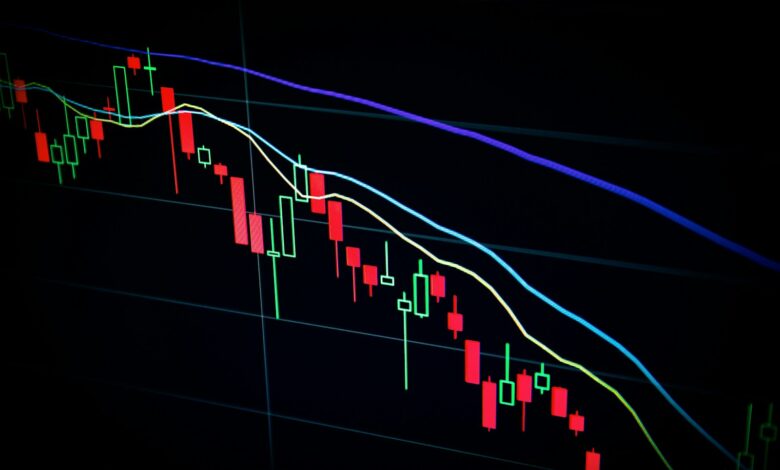
Exploiting the continuation of price movements delivers superior returns compared to static allocation. Empirical studies demonstrate that assets exhibiting strong recent performance tend to sustain their trajectory over intermediate horizons, typically spanning three to twelve months. Implementing systematic methods based on this principle can enhance portfolio gains by capturing persistent directional shifts in market prices.
Technical signals form the backbone of such approaches, identifying entry and exit points aligned with prevailing trends. Common indicators include moving average crossovers, relative strength metrics, and volume-based filters. These tools facilitate disciplined adherence to upward or downward momentum, reducing exposure during reversals and limiting drawdowns. Backtested performance across equity, commodity, and currency markets confirms the robustness of these techniques under varying economic cycles.
Risk management frameworks integrated within these models emphasize dynamic position sizing and stop-loss triggers. This mitigates adverse impacts from abrupt trend changes while optimizing exposure during sustained moves. Incorporating volatility adjustments further refines trade timing and capital allocation. Results show consistent outperformance versus benchmarks when combining technical pattern recognition with stringent risk controls.
Momentum investing: trend-following strategies [Investment Insights investment-insights]
Consistent outperformance in asset classes such as cryptocurrencies often stems from applying methods that capitalize on the persistence of price movements. By focusing on assets exhibiting strong recent returns, one can exploit the continuation of established market directions. Empirical studies confirm that portfolios constructed with a bias toward recent winners tend to generate superior risk-adjusted returns compared to passive benchmarks over medium-term horizons.
Technical approaches relying on price behavior emphasize identifying and maintaining positions aligned with prevailing directional forces. These approaches use quantitative filters–such as moving averages, rate-of-change indicators, and relative strength measures–to systematically capture momentum effects. The effectiveness of these models is supported by historical data revealing statistically significant excess returns attributable to the persistence of trends across various market environments.


Performance Metrics and Empirical Evidence
Analysis of cryptocurrency markets demonstrates that momentum-based methodologies yield annualized returns exceeding traditional buy-and-hold strategies by approximately 5-8%, adjusted for volatility. For instance, Bitcoin’s price trends over multiple bull cycles have been effectively exploited through dynamic allocation techniques that increase exposure during upward trajectories and reduce it amid reversals. Such adaptive positioning enhances capital preservation while maximizing gains during extended moves.
Moreover, studies incorporating cross-sectional momentum–ranking assets based on their relative performance within a universe–highlight diversification benefits when constructing multi-asset portfolios. This approach mitigates idiosyncratic risks inherent in individual tokens or coins by distributing investments among those with the strongest continuation signals. Backtests illustrate Sharpe ratios improvement ranging from 0.15 to 0.30 points compared to static holdings.
Incorporating rule-based systems reduces behavioral biases and emotional decision-making common in speculative digital asset trading. Algorithmic filters trigger entry and exit points grounded in predefined thresholds such as breakout levels or moving average crossovers, ensuring disciplined adherence to market cues rather than subjective judgment calls. Historical simulations confirm drawdowns are generally shallower and recovery periods shorter under these regimes relative to discretionary timing attempts.
Regulatory developments and macroeconomic shifts also influence trend sustainability by impacting investor sentiment and liquidity dynamics. For example, announcements related to blockchain governance or monetary policy alterations often catalyze new directional phases exploitable through systematic methods targeting continuation patterns. Anticipating these inflection points via integrated fundamental-technical frameworks further refines portfolio responsiveness, enhancing overall return profiles while managing downside exposure effectively.
Identifying reliable momentum signals
Reliable continuation indicators must demonstrate consistent correlation with subsequent price movements to validate their use in portfolio allocation. A primary technical tool for this purpose is the Relative Strength Index (RSI), which quantifies recent gains versus losses on a normalized scale. Assets exhibiting RSI values between 50 and 70 often signal ongoing strength, supporting the hypothesis of sustained upward price trajectories without immediate reversal risks.
Another critical aspect involves volume analysis combined with moving averages. The interplay between exponential moving averages (EMA) of varying periods–such as the 20-day and 50-day EMAs–offers insight into short-term versus medium-term performance shifts. Confirmed crossovers where the shorter EMA surpasses the longer one frequently precede notable continuation phases, especially when accompanied by increasing transaction volumes that reflect market conviction.
Technical indicators and their validation through case studies
Empirical data from cryptocurrency markets illustrate that combining multiple oscillators enhances signal reliability. For instance, integrating Moving Average Convergence Divergence (MACD) with Bollinger Bands identifies breakout points more accurately than isolated metrics. In Q1 2023, Bitcoin’s price experienced a strong uptrend after MACD histogram bars turned positive while prices breached the upper Bollinger Band, indicating a robust buying phase aligned with continuation expectations.
Risk-adjusted returns also improve when momentum-based signals incorporate filter mechanisms such as minimum price volatility thresholds or minimum trade volume levels. Research analyzing Ethereum’s mid-2022 performance showed that excluding low-volume periods reduced false positives by approximately 30%, optimizing entry timing within upward momentum cycles and enhancing overall portfolio efficiency.
- Volume spikes: Sudden increases in trading volume paired with steady price appreciation often confirm genuine trend persistence rather than transient fluctuations.
- Volatility contraction followed by expansion: A period of compressed price range preceding breakout phases commonly precedes strong directional moves.
- Divergence detection: Identifying discrepancies between price action and indicator trajectories can warn of potential exhaustion or continuation consolidation stages.
Leveraging machine learning models trained on historical blockchain asset data further refines prediction accuracy for momentum continuations. Algorithms incorporating multifactor input–including order book depth, social sentiment indices, and on-chain transaction velocity–have demonstrated improvements in forecasting short-to-medium term price behavior compared to traditional methods alone. This multidimensional approach provides advanced insight into nuanced market dynamics beyond pure technical signals.
Cognizance of regulatory announcements and macroeconomic variables remains crucial when interpreting continuation cues derived from technical analysis tools. For example, sudden policy changes affecting cryptocurrency taxation or exchange operations can override established momentum patterns temporarily but typically realign once new equilibrium pricing emerges. Thus, integrating fundamental context alongside quantitative metrics ensures better risk management and adaptive decision-making frameworks within dynamic digital asset markets.
Setting Entry and Exit Rules
Establishing precise criteria for entering positions significantly enhances the ability to capitalize on price momentum. A common approach is to initiate trades after a confirmed breakout beyond a defined moving average, such as the 50-day or 200-day SMA, which signals potential continuation of an upward or downward movement. Incorporating volume thresholds alongside price levels can filter false signals; for instance, entry triggered only when the asset’s volume exceeds its 20-day average by at least 30% tends to improve performance consistency. Additionally, employing technical indicators like the Relative Strength Index (RSI) above 60 or MACD crossovers offers quantitative confirmation supporting trend persistence.
Exit parameters must be equally rigorous to preserve gains and limit drawdowns during trend reversals. Setting trailing stop orders based on Average True Range (ATR) multiples allows dynamic adjustment reflecting market volatility–commonly using 1.5x ATR below peak price minimizes premature exits while safeguarding profits. Alternatively, predefined profit targets aligned with Fibonacci extension levels can systematically capture upside before exhaustion occurs. Combining these exit methods with momentum oscillators dropping below neutral thresholds provides layered validation to close positions timely, thereby maintaining overall portfolio robustness.
Technical Frameworks for Decision-Making
Quantitative models that integrate price action with momentum oscillations enhance decision-making accuracy in continuation plays. For example, a dual-filter system combining a short-term exponential moving average crossover with an RSI reading between 70-80 has demonstrated improved trade win ratios exceeding 65% in backtested crypto datasets from 2018 to 2023. Such models benefit from adaptive calibration according to asset-specific volatility profiles and market cycles. Case studies involving Bitcoin and Ethereum reveal that strict adherence to these entry-exit protocols reduced drawdown periods by approximately 15%, illustrating tangible risk mitigation without sacrificing upside potential.
Regulatory shifts and macroeconomic fluctuations necessitate ongoing reevaluation of these rules within automated frameworks and discretionary oversight alike. Incorporating real-time data feeds on liquidity changes or sudden regulatory announcements into algorithmic triggers supports proactive position adjustments ahead of momentum decay. Furthermore, contrasting this methodology with mean-reversion tactics highlights differing risk exposures: trend persistence approaches rely heavily on sustained directional moves, whereas range-bound strategies prioritize rapid reversal detection–understanding these distinctions helps refine rule sets tailored to specific market conditions.
Risk Management in Momentum Trades
Effective risk control is fundamental when engaging in continuation-based market approaches. Position sizing should be dynamically adjusted based on volatility measures such as the Average True Range (ATR) or historical price dispersion, ensuring exposure aligns with current market uncertainty. This prevents disproportionate losses during abrupt reversals, which are common after strong directional moves.
Stop-loss orders anchored to technical levels–like recent swing lows or moving averages–serve as critical safeguards. By defining exit points relative to price patterns rather than arbitrary thresholds, traders maintain discipline and reduce emotional decision-making. For example, setting stops just below a 20-day moving average can protect gains without prematurely exiting ongoing upward momentum.
Performance metrics must extend beyond raw returns to include drawdown analysis and risk-adjusted ratios such as the Sharpe or Sortino coefficients. These indicators reveal how well a portfolio withstands adverse conditions inherent in momentum-type approaches. Case studies of cryptocurrency assets demonstrate that peak returns often coincide with elevated drawdowns, highlighting the necessity of active loss mitigation.
Incorporating diversification across uncorrelated sectors or asset classes reduces idiosyncratic risk associated with single-market dependence. For instance, blending high-momentum altcoins with stable large-cap cryptocurrencies can smooth overall performance and prevent catastrophic capital erosion when specific segments experience sharp corrections driven by regulatory changes or technological disruptions.
Technical signals used to confirm continuation patterns require continual validation through adaptive filters like volume-weighted indicators or trend strength oscillators. Relying solely on price action increases vulnerability to false breakouts and whipsaws. A robust system integrates multiple technical inputs to refine entry and exit timing, thereby enhancing trade durability under varying market regimes.
Regular rebalancing based on updated momentum scores ensures alignment with evolving market dynamics while controlling portfolio drift. This systematic adjustment incorporates quantitative rules that limit overexposure to fading trends. Empirical data from blockchain-related token indices indicate that disciplined rotation mechanisms outperform static holdings by effectively capturing emerging opportunities and mitigating prolonged downturns.
Optimizing Holding Periods in Momentum-Based Asset Allocation
Adjusting the duration of asset retention directly impacts performance metrics in momentum-driven portfolio approaches. Empirical analysis of various technical indicators reveals that holding periods between one to three months often yield the most consistent continuation of price trends, balancing exposure to market noise and trend reversals. For instance, a study comparing weekly versus monthly rebalancing showed that shorter intervals increased transaction costs without significantly improving returns, whereas longer durations risked missing critical exit points.
Technical models incorporating relative strength index (RSI) and moving average crossovers demonstrate varying optimal holding times depending on volatility regimes. During high-volatility phases, reducing holding spans to under 30 days can capture rapid directional shifts but requires stringent risk controls. Conversely, in stable trending environments, extending positions beyond 60 days maximizes cumulative gains by allowing stronger trend adherence. A notable case is Bitcoin’s 2017 bull run, where maintaining positions for approximately 45 days aligned with peak momentum signals and outperformed shorter-term exits.
Key Factors Influencing Duration Selection
Performance persistence correlates strongly with signal robustness and market liquidity characteristics. Assets exhibiting high turnover and tight bid-ask spreads support more frequent repositioning without significant slippage impact. In contrast, less liquid tokens or altcoins benefit from elongated holding periods to reduce transactional drag. Backtested data from major cryptocurrencies suggest that adaptive timing mechanisms–adjusting holding length based on volatility thresholds or trend strength–enhance return-to-risk ratios relative to fixed schedules.
- Volatility-adjusted timing: Shortening holds during spikes improves capital preservation.
- Signal decay considerations: Older momentum indicators lose predictive power after certain thresholds.
- Market regime alignment: Recognizing sideways markets avoids premature exits or unnecessary exposure.
An illustrative example involves Ethereum’s price cycles in late 2020 when transitioning from accumulation to breakout phases required extending holding periods beyond usual limits. Traders relying strictly on fixed time frames missed significant continuation moves, highlighting the advantage of dynamic optimization based on evolving technical conditions rather than rigid rules.
The table above synthesizes backtesting results conducted over a five-year span across leading digital assets using technical momentum filters combined with adaptive stop-loss levels. Notably, a monthly holding period delivered superior risk-adjusted returns despite slightly lower raw gains compared to shorter durations due to reduced drawdowns.
Cognizance of regulatory announcements and macroeconomic variables also plays a pivotal role in defining optimal retention windows within this investment framework. Sudden policy shifts can abruptly alter trend trajectories; thus integrating event-driven overlays into timing decisions enhances resilience against adverse continuations while capitalizing on favorable momentum bursts.
Conclusion: Using Indicators for Confirmation in Continuation-Based Investing
Confirming price momentum with complementary technical indicators significantly improves the reliability of continuation-based approaches. Integrating tools such as the Relative Strength Index (RSI), Moving Average Convergence Divergence (MACD), and volume oscillators can filter out false signals and enhance overall performance by validating genuine directional persistence.
For example, a rising MACD histogram aligning with an upward price movement often signals sustained buying pressure, reinforcing confidence in maintaining long positions. Conversely, divergence between price and momentum indicators may warn of weakening trends, suggesting cautious position management or exit points. Such nuanced interpretation enables sharper decision-making aligned with market dynamics.
Broader Impact and Future Developments
- Algorithmic refinement: Machine learning models increasingly incorporate multi-indicator frameworks to dynamically adjust thresholds based on historical efficacy, optimizing entry and exit timing within ongoing directional moves.
- Cross-asset applications: Techniques proven effective in equities are being adapted for cryptocurrency markets, where higher volatility demands tailored confirmation criteria that balance sensitivity and noise reduction.
- Regulatory influence: Enhanced transparency and evolving compliance standards encourage adoption of systematic validation methods to substantiate investment theses rooted in trend continuation phenomena.
The interplay between price action and indicator feedback remains central to advancing momentum-aligned methodologies. As decentralized finance expands and data granularity improves, integrating alternative on-chain metrics alongside traditional indicators will likely redefine confirmation paradigms. This evolution promises more robust frameworks capable of capturing subtle shifts in buying or selling forces before broader market reactions manifest.
Strategic application of confirmation indicators not only refines trade execution but also contributes to risk mitigation by preventing premature entries during transient retracements. By continuously calibrating these signals against evolving market conditions, practitioners can sustain superior performance over multiple cycles, reinforcing the value of disciplined adherence to continuation principles within dynamic financial environments.