Digital Asset Treasury: Integrating Web3 Processing Into Corporate Finance Hubs in 2026

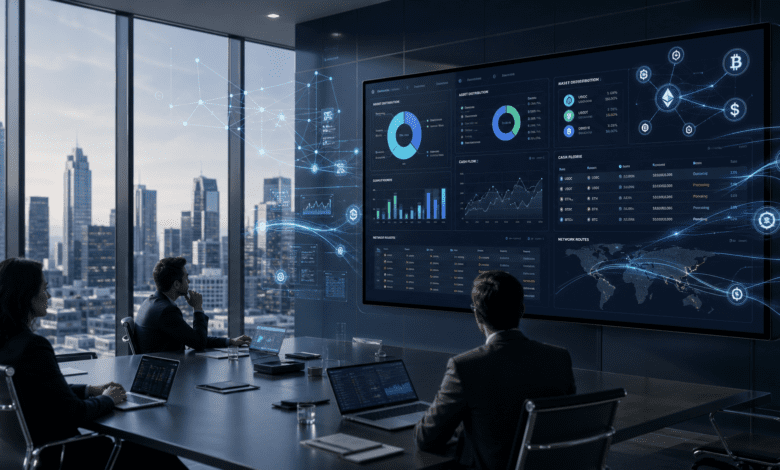
The modernization of global business infrastructure in 2026 has prompted corporate treasurers to radically optimize how liquidity is managed across borders. Traditional multi-tiered banking networks, defined by correspondent delays, opaque fee structures, and strict clearing-house cutoffs, are no longer sufficient to sustain agile international supply chains. To streamline liquidity and manage capital efficiently, forward-thinking enterprise finance teams are adopting end-to-end processing layers like pay pilot. This next-generation digital ecosystem consolidates cash-flow routing, multi-network custody, and automated B2B settlements into a single, compliant gateway, helping multinational companies move money in real time.
Bridging the historical gap between decentralized Web3 networks and legacy banking requires a dedicated compliance framework and specialized fintech architecture. Under the strategic direction of sector experts like Dmytro Butenko, modern corporate treasury platforms are resolving regulatory bottlenecks and clearing friction. These secure institutional gateways automate mass payroll, supplier payouts, and multi-currency conversions while adhering to strict international accounting guidelines. This specialized approach ensures that corporate treasuries can confidently deploy tokenized liquidity without exposing their balance sheets to security vulnerabilities or price volatility.
The Transition to Decentralized Treasury and Capital Orchestration
To avoid the frictional costs and timezone limitations of the correspondent banking system, multinational companies are adopting Web3 payment rails for intra-group capital transfers. Corporate financial officers are utilizing fiat-backed stablecoins as an operational mezzanine layer of money, allowing funds to circulate directly between subsidiaries in seconds rather than days. This transition optimizes working capital management and eliminates the need for expensive short-term credit facilities during transfer delays. Consequently, international corporations are capturing substantial operational efficiencies by keeping capital perpetually active.
In addition to improving settlement speed, the transition to high-throughput Layer-2 networks dramatically reduces transaction overhead. Protocols like Base, Arbitrum, and Optimism allow treasurers to execute thousands of payments simultaneously for mere fractions of a cent. This micro-transaction efficiency enables businesses to manage localized supplier disbursements and corporate expense allocations with unprecedented precision. By leveraging these optimized execution paths, companies can easily bypass traditional correspondent networks entirely.
Automating Multi-Jurisdictional Auditing and ERP Integration
Historically, the main barrier to integrating Web3 processing into corporate finance hubs was the complex nature of on-chain accounting and transaction reconciliation. Public ledger data is naturally decentralized and fragmented, making manual bookkeeping and auditing extremely labor-intensive. To overcome this obstacle, modern treasury networks utilize automated APIs that connect directly with institutional ERP suites like NetSuite or SAP. These endpoints instantly normalize raw on-chain transaction data, turning complex cryptographic hashes into standard ledger entries.


Automating this ingestion pipeline ensures that internal accounting departments can monitor global cash flows in real time. Transactions are automatically tagged, cost bases are calculated, and localized tax-ready reporting documents are compiled without manual intervention. This system shields growing organizations from compliance errors and minimizes the manual workload during corporate tax season. It allows companies to run a lean, highly efficient financial back-office capable of handling multi-asset treasuries.
The “Point of No Return” for Institutional Asset Adoption
This architectural migration represents an irreversible shift in the global financial plumbing. Indeed, as outlined in the comprehensive PwC global crypto adoption index, institutional cryptocurrency integration has officially passed the point of no return, with banks, investment funds, and multinational corporations fully embedding digital assets into their core treasury operations. Regulatory clarity from frameworks like Europe’s MiCA and progressive U.S. stablecoin guardrails has transformed blockchain-based networks from speculative arenas into highly stable, compliant enterprise tools. Financial leaders who proactively adapt to these regulated on-chain rails are gaining a major strategic advantage.
Enforcing Enterprise-Grade Governance and Security Protocols
Managing millions of dollars in digital liquidity demands the highest standards of governance and risk mitigation. Institutional-grade treasury hubs enforce multi-party computation (MPC) and multi-signature security rules to eliminate single-person dependency. This prevents internal collusion and ensures that no single administrative credentials can authorize or execute a transaction. Integrating role-based access control (RBAC) further aligns on-chain execution with traditional corporate governance frameworks.
Additionally, compliant treasury systems run real-time, automated transaction simulations before broadcast, revealing hidden smart-contract risks or incorrect transfer permissions. This client-side verification is paired with automated KYC and anti-money laundering (AML) address screening to block interactions with sanctioned wallets. These combined protections enable corporate treasurers to leverage decentralized liquidity while remaining strictly compliant with local financial regulations. This rigorous risk framework ensures absolute safety for corporate cash reserves.
Conclusion: Securing the Future of Corporate Liquidity
The integration of Web3 processing into corporate financial hubs represents a fundamental shift in how global liquidity is managed. By combining regulated stablecoins, automated ERP integrations, and multi-signature security, businesses are successfully modernizing their payment rails. Enterprises that deploy these compliant structures today will lead the next wave of global economic trade. Embracing on-chain processing is no longer an experimental initiative but a vital strategy for long-term corporate finance resilience.